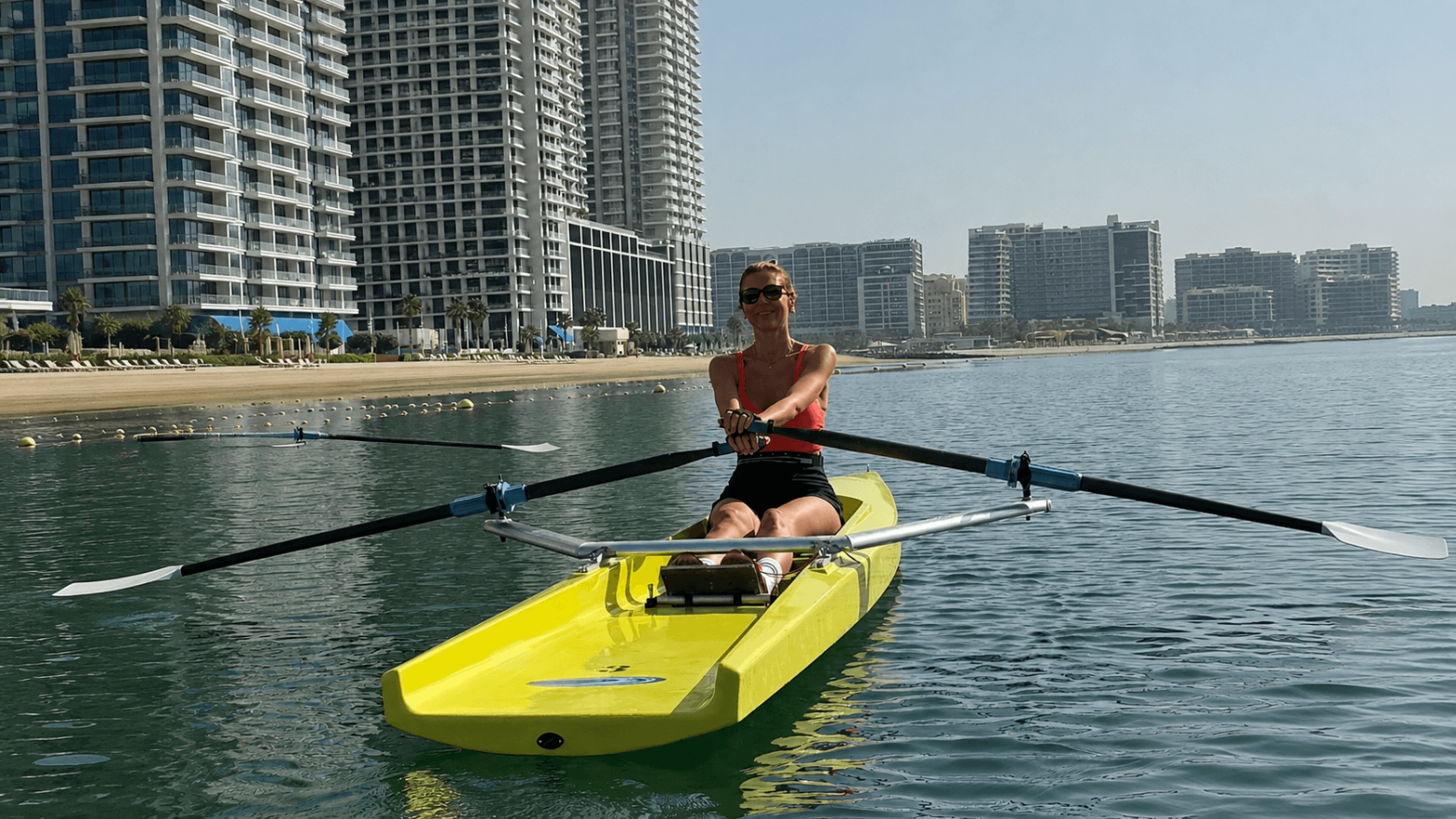
Most people plan their career for the next promotion. Almost nobody plans their body for the decade after they retire.
You can spend twenty years building a career and still end up unable to enjoy what it bought you, the house with stairs you can’t manage, the grandkids you can’t keep up with, the trip you can’t join because your body can’t handle it. Vitality isn’t a side conversation to your career. It’s the thing that determines whether you actually get to use everything you built it for.
Why Vitality Is a Different Problem Than Daily Energy
Managing your energy today is one thing. Building a body that can support you for the next twenty years is another. You may want to hike, play tennis at 70, or keep up with your kids or grandkids. The choices you make today shape whether you can still do those things later.
Most executives know how to manage today’s energy with coffee, sleep, or a better lunch. Very few actively prepare their bodies for their sixties. Long-term vitality rarely feels urgent today. That is exactly why people keep postponing it until change becomes much harder.
What Does the Research Say?
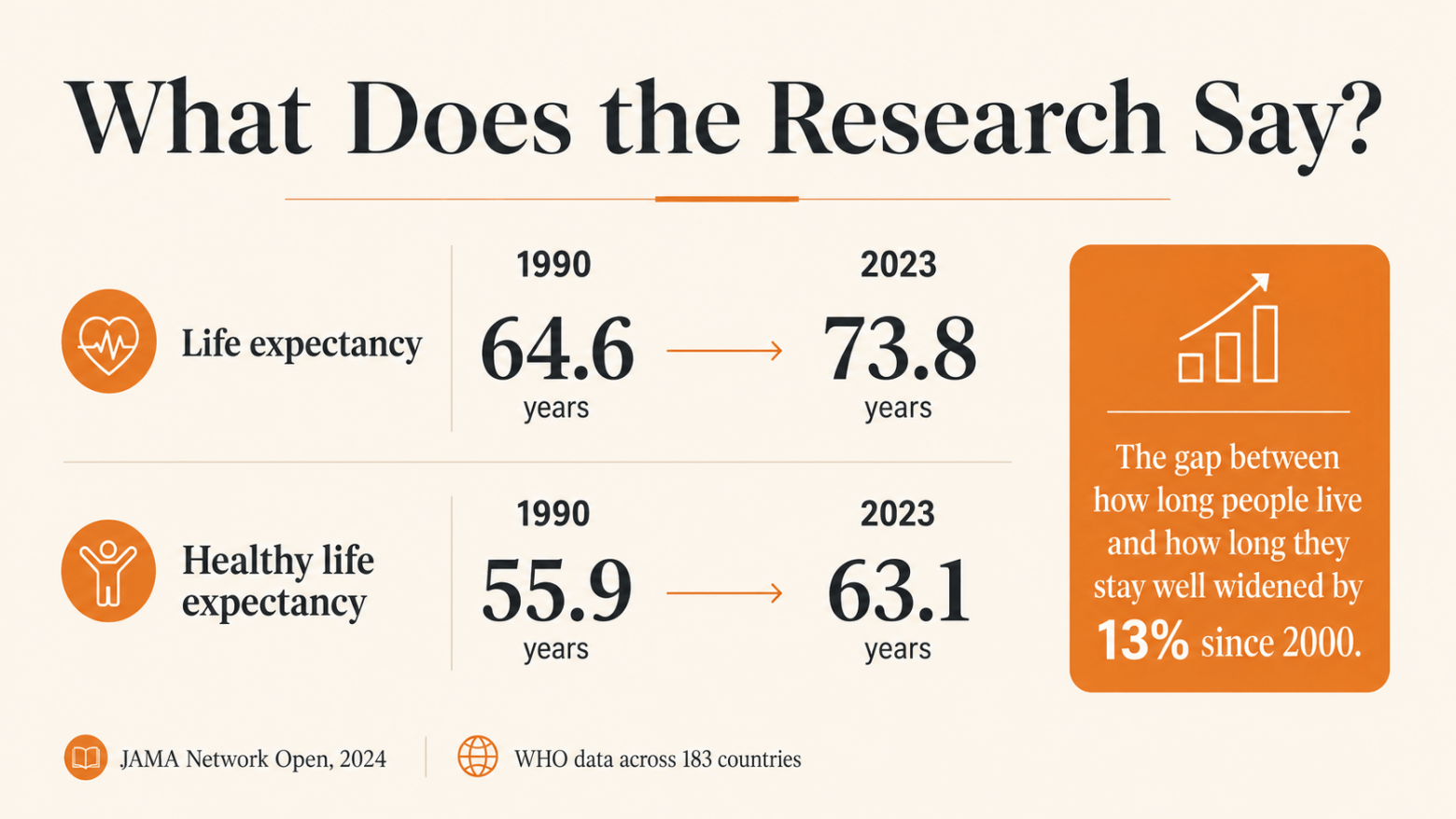
A study published in JAMA Network Open in December 2024, using WHO data across 183 countries, found that while global life expectancy rose from 64.6 to 73.8 years between 1990 and 2023, healthy life expectancy only rose from 55.9 to 63.1 years over the same period (JAMA Network Open, 2024). The gap between how long people live and how long they stay well has widened by 13% since 2000.
In plain terms: people are living longer, but the extra years aren’t automatically healthy ones. The decisions you make now, not later, will shape whether those extra years are healthy. That gap doesn’t close on its own, and it isn’t distributed randomly. Decisions made decades earlier shape that gap long before it becomes visible.
What Does This Mean for a Demanding Career?
Most executives focus on what they need to deliver this quarter. Few ask what their body will need to still function well at 70. Many will still work in their sixties or seventies. The choices they make now will shape how well they function then.
A demanding career can push long-term health down the priority list. Immediate deadlines usually win. Strength training, proper recovery, and consistent habits take years to show their full value. That makes them easy to postpone.
Why Chasing Trends Doesn’t Prepare Your Body for Later Years
The wellness industry sells daily fixes, a new supplement, a new protocol, a new hack, because daily fixes sell. None of them ask the actual question: what does your body need to still carry you at 70, not just get you through this week.
A number on the scale can drop without your body actually getting stronger or more capable. Fad diets can get you a beach body, but we all know what happens after vacation, easy come, easy go. You need to build a sustainable lifestyle today, not a temporary result.
I hear stories like this every day: “I tried to play football with my kid and was out of breath in minutes.” “Becoming a father at 50 changed how I think about ageing. When my daughter is 20, I’ll be 70, the age most people look old enough to be mistaken for her grandfather. I want to still look like her dad.” “Running the New York marathon is one of my goals.”
They all need a longer preparation period. The good news is it isn’t difficult.
I get a lot of questions about my skin. At 44, I have no facials and no botox. Genetics have been kind to me, that’s a fact. But I never eat trash. What I know is we are what we eat. Today, I look younger and slimmer thanks to my lifestyle. Not because I have more time to focus on my health, but because my health is my priority, and I make choices based on that.
Trend-chasing and preparing your body for the next decades are different goals entirely. One is reactive, driven by whatever feels urgent this month. The other requires deciding now what you’re building toward, long before there’s any visible reason to.
What Actually Prepares Your Body for the Next Decades?
Strength, Not Just Movement
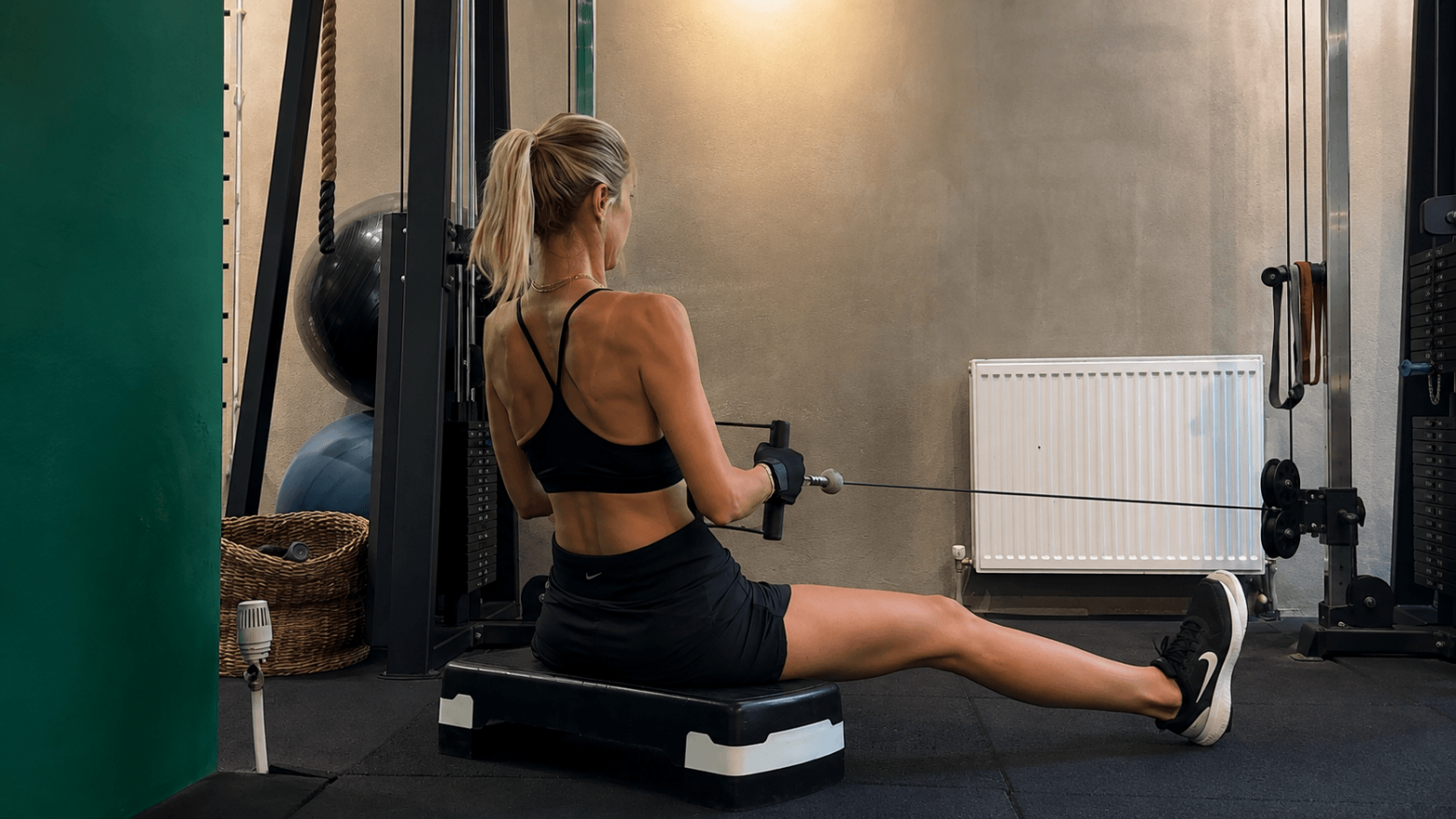
Muscle mass declines with age by default, starting earlier than most people expect. Executives who still hike, ski, or keep up with their kids at 60 didn’t get there by accident. They built and kept strength deliberately, for years, before they needed it. Contrary to common belief, cardio alone doesn’t protect this. You have to train strength on purpose and maintain it the same way.
Make Recovery Part of the Plan
Sleep and rest aren’t what you do after the work is done. They’re what your body is quietly using to prepare for the next twenty years, whether you’re paying attention or not. Treating recovery as something you’ve earned, rather than something you require, is exactly how it gets deprioritized for decades at a time.
Build Consistency for the Long Term
A demanding career rewards intensity, sprint to the deadline, push through the trip. A body built for the next decades rewards consistency instead, the plainer, less exciting habit repeated for years. The executives who are still capable at 70 rarely trained harder than everyone else. They just didn’t stop.
How Should Executives Think About This?
Most executives focus on what will help them perform this year. They should also ask what they want their body to do in twenty years.
You cannot build long-term vitality in one quarter. Long-term vitality is built through the choices you make consistently over time. You either choose that direction now or keep delaying it. The cost of postponing it doesn’t show up until it’s much harder to reverse.
Key Takeaway
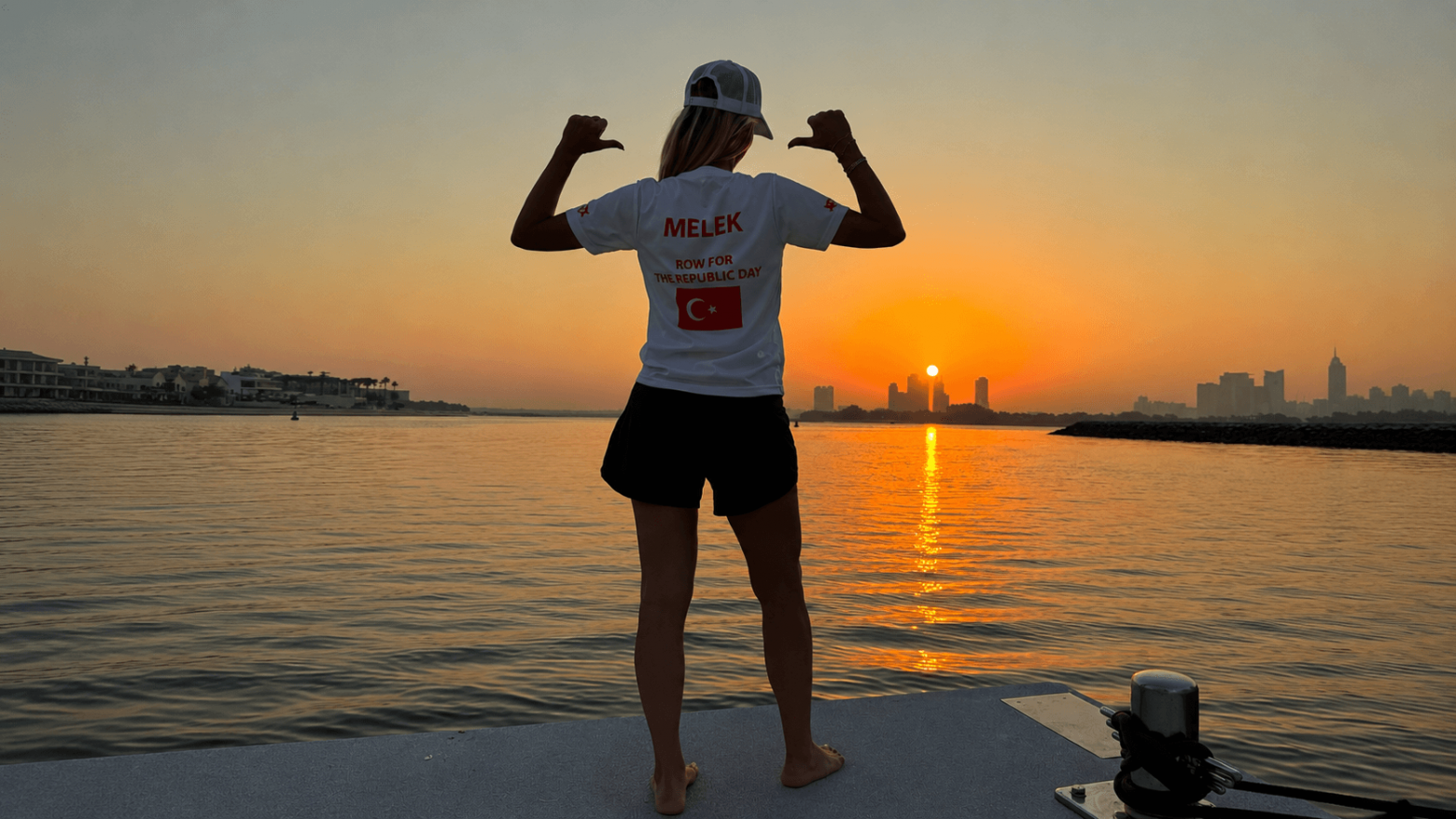
Vitality is not about getting through this year’s calendar. It is about what your body can still do fifteen or twenty years from now. You may still want to hike, play with your kids, and stay physically capable, not simply keep working. Living longer does not automatically mean living those extra years in good health. What you build into your body now shapes how healthy and capable those later years can be.
Related Reading
Self-Empathy vs. Self-Discipline for Sustainable Habits
How Sleep Affects Executive Performance

0 Comments