Most senior executives have already tried the standard advice. They’ve tried eating better, walking 10k steps a day, sleeping eight hours and managing their stress. Yet many still hit an energy dip at 3pm, experience fluctuations throughout the day, or notice their mood and focus slipping exactly when they need them most.
Executives already have the information. The problem is that generic wellness advice assumes an average schedule, an average stress load, and an average life. It does not reflect the reality of an executive running a company, managing teams and travelling constantly. They may also be trying to be a parent by the end of the day while managing the challenges of the day. That wellness advice does not support peak energy and a stable mood every day.
This post tries to show why the gap between generic wellness advice and executive wellness advice exists. It also looks at what actually supports consistent high energy, performance and mood throughout the day, wherever they are.
What Is “Generic” Wellness Advice From My Perspective As a Former Finance Executive?
Generic wellness advice is everywhere: eat more vegetables, walk more, count calories, sleep eight hours. I gave the same advice myself early on. It targets the general population, not someone juggling board meetings, a P&L, and a 6am flight.
By the way, this advice is not wrong on its own. The problem is that this advice doesn’t address the needs of the executives. It assumes a level of routine, predictability, and personal time that a senior executive’s calendar rarely allows. At the end of the day, its broad structure has limitations. It does not support consistently high energy or a stable mood under real pressure.
What Is Executive Wellness?
Executive wellness just means taking the same basics, nutrition, exercise, sleep, recovery, stress, and building them around a harder life: time zones, client dinners, a family waiting at home. It’s not a different rulebook. It’s the same foundations, under more pressure.
It supports steady energy, a stable mood, clear thinking, and consistent performance within a demanding lifestyle. You can feel at your best at 3pm or 8pm without needing another coffee.
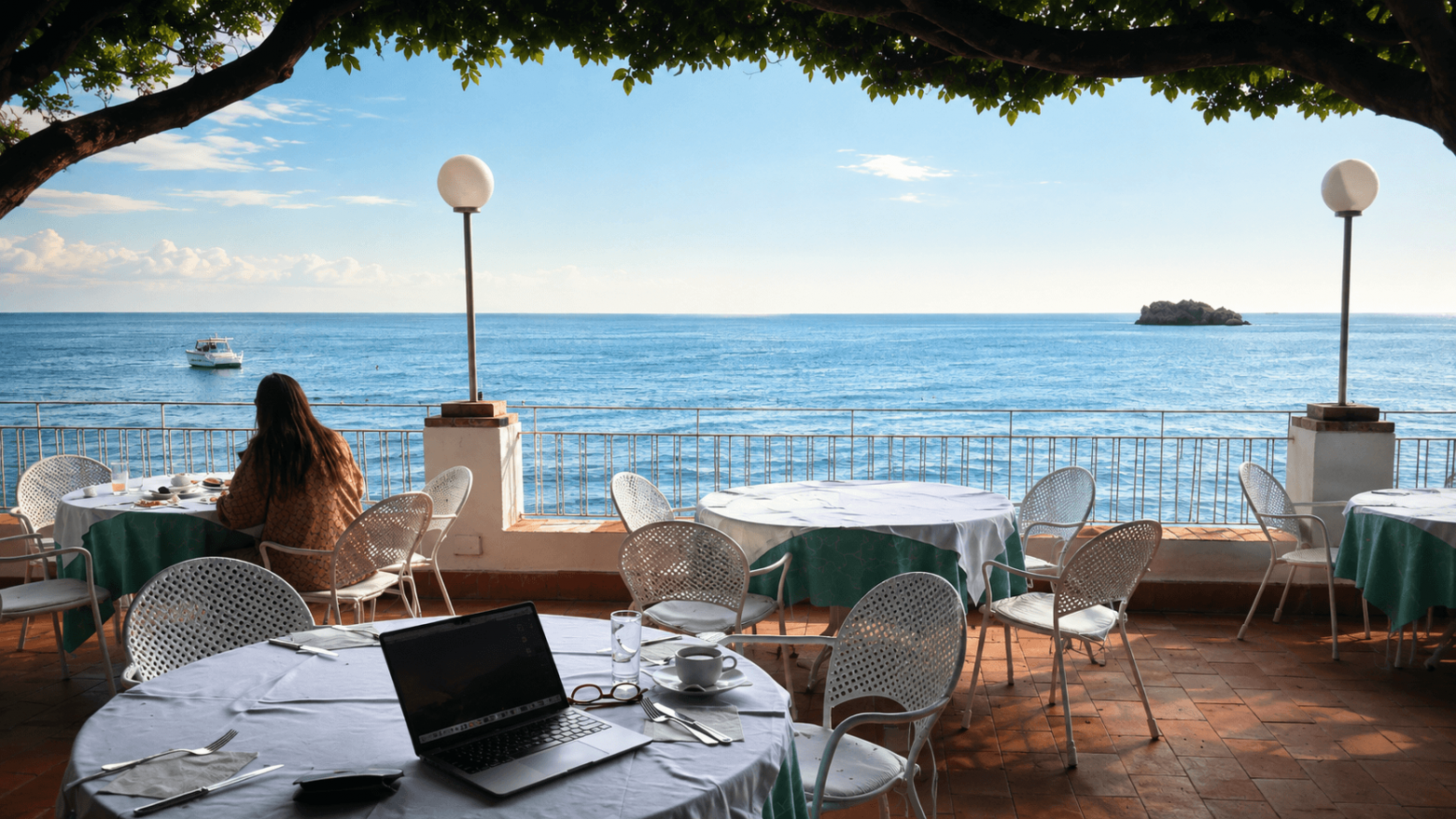
I experienced this myself during my finance career. I relied on several coffees a day just to keep working late into the evening. Today, I don’t drink coffee, yet I can run sessions at 6am or 11pm without the same energy fluctuations I used to have.
Why Doesn’t Generic Advice Work for Senior Executives?
Generic advice tends to fail for senior executives because their schedules are unpredictable. They travel frequently, make important decisions at any time of the day and have to show leadership consistently. Those gaps don’t show up right away, like missing a workout and thinking that they will gain weight. However, they can show up as an energy dip at 4pm, reduced concentration after lunch, or less patience for the team on a stressful day.
Nutrition is a good example. Many executives assume that choosing something ‘healthy’, like a chicken salad or protein shake, should automatically keep their energy stable. I used to do the same, yet I still found myself reaching for coffee, tea or chocolate during an afternoon crash. Chicken salad or protein shakes might work for some people. However, my first-hand experience with clients shows that executives need different strategies. My personal experience in finance taught me the same.
Executives do not need more generic health information. They need strategies that work under pressure.
They Have to Perform In Unpredictable Conditions
A generic plan assumes you’ll eat, train or walk at certain times each day. It also assumes a certain mood and that you’ll sleep in your own bed every day.
For a high achiever whose calendar changes regularly, that assumption can make consistency difficult from the beginning. What works on a quiet Friday may be different on a busy Tuesday. That Tuesday may include back-to-back meetings, an evening event, an early flight or a family responsibility.
They have to perform at the same level whatever the conditions, as a business leader, a mother, father or partner.
Travel Does Not Allow Routine
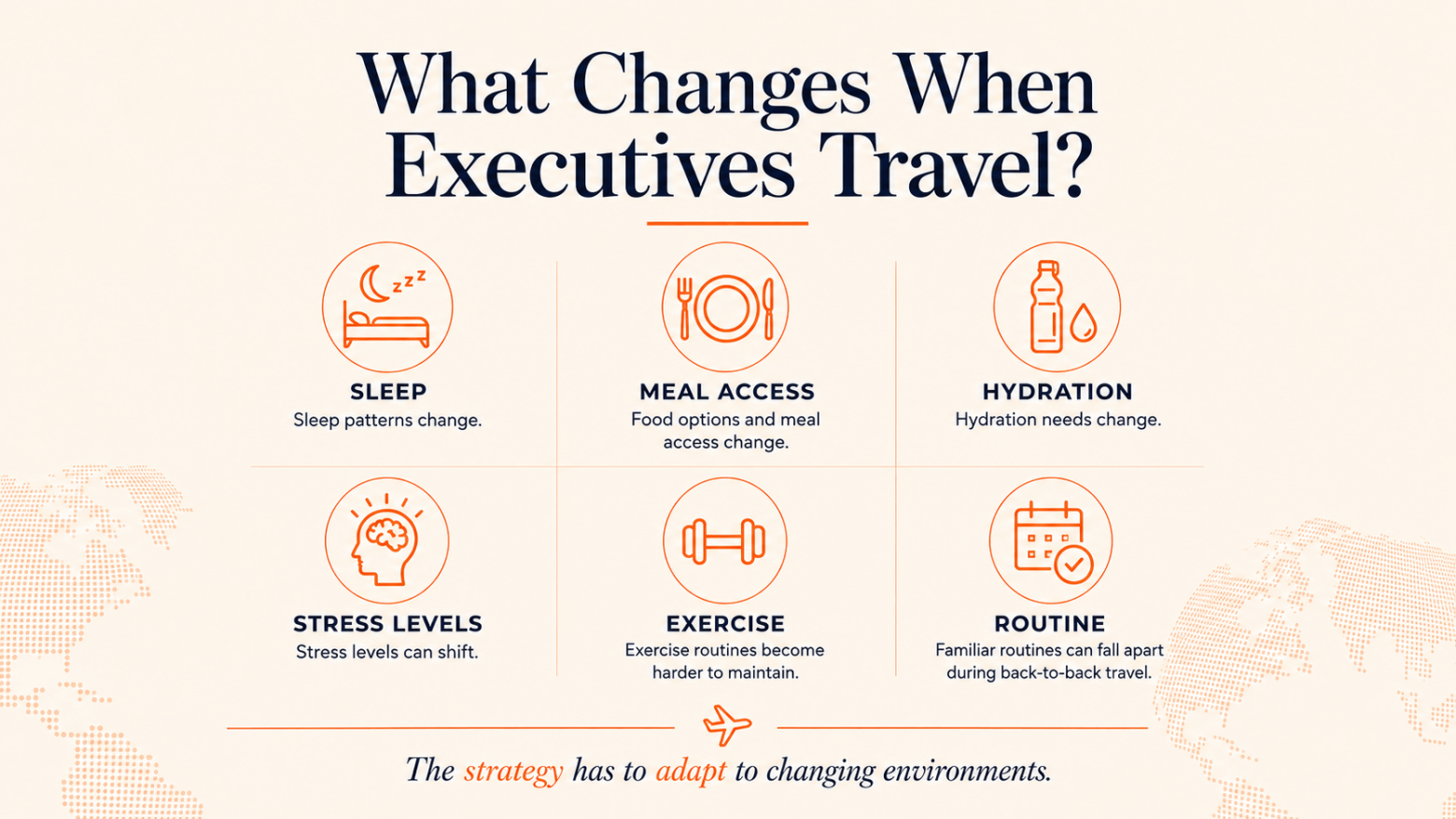
Continuous travel changes sleep patterns, meal access, hydration needs, stress levels all at once. Some cannot even sleep without their pillows.
While everything is under control at home, the routine can easily fall apart during a week of back-to-back travel. Staying consistent with nutrition, hydration, sleep, exercise, or recovery requires a strategy that can adapt to changing environments.
As a result, they cannot wait until they return home to regain their energy as the travel never stops. They might have 41 meetings in 3 days and they have to find that energy to perform as an executive.
Decision Fatigue Changes What’s Sustainable
Senior roles require many consequential decisions every day. They still have to continue to make many high-stakes decisions, and feeling depleted is a luxury.
This is an important issue. Recent research on leadership stress supports this: in Development Dimensions International’s 2025 Global Leadership Forecast, 71% of leaders reported increased stress levels, up from 63% in 2022 (DDI, 2025). Separately, LHH’s 2025 Views From the C-Suite report found that leadership burnout rose to 56%, up from 52% the year before (LHH, 2025).
Advice that depends heavily on daily willpower becomes harder to sustain under demanding conditions. If you travel across regions, you can work for up to 13 days without a break and you have to perform anyway.
Generic Plans Ignore Context
A short walk after lunch, eating five times a day or a power nap might be reasonable suggestions for most people. However, they are difficult to implement for someone who’s in back-to-back meetings from 8am to 7pm.
I hear questions about generic wellness advice from clients in almost every session. To be more specific, what I think about a power nap while that particular client travels constantly and lives in hotel rooms. What my opinion is on exercise while the client cannot leave his laptop.
I experienced the same issue with generic advice myself. I was hitting the gym every day while expecting to see results, de-stress myself, quiet my mind. Later I realized that I didn’t have to push myself. I needed the right strategy to get real results for a healthier, happier version of myself.
Generic advice targets broad populations, not a specific role, schedule, or set of limitations. Therefore, reasonable strategies make the difference for senior executives.
Otherwise, generic advice creates extra stress or anxiety for an executive while they are already under significant stress.
The goal is not a perfect routine. It is the ability to perform consistently when the routine changes.
What Should Replace Generic Advice?
I start with someone’s real life: their agenda, their sleep, how much they travel, what they reach for under stress (coffee, sugar, or a drink at night). From there, we build daily habits, nutrition, hydration, recovery, around what actually supports steady energy, a stable mood, and high performance. The goal is a system that works every day, not a fixed plan built for someone else’s life.
At the end of the day, it is making better decisions in real situations. What to order at a business dinner with a client, how to manage sleep away from home, and how to keep energy high and mood stable on a demanding day from morning to evening.
Executives are like athletes, they cannot afford to feel drained. The role demands the same energy level regardless of the time of day.

Is Personalized Coaching Necessary, or Just Nice to Have?
For executives, energy has a direct impact on focus, mood, leadership, and quality of decision-making. That makes health more than a lifestyle choice. It becomes an important part of how they manage their performance and show up as a leader. For example, think of a version of yourself: you wake up with good energy, you show leadership, manage your teams, be a role model throughout the day and you still have energy left for your kids.
It is of course possible to manage your energy if you put in enough time, attention and trial and error. However, the challenge is staying consistent when work gets busy, travel picks up, and routines change. The idea of a juice detox after a vacation where you eat without any structure collapses at the first crisis in the office on a Monday afternoon.
Personalized coaching provides a structure built around your goals, agenda, travel and everyday life, including nutrition strategies for stable energy and mood. Because the plan fits your reality, rather than asking you to reorganize your life around the plan, even small changes can make a noticeable difference. Many of my clients are surprised by the improvements they see in their energy, body and cognitive performance after relatively small adjustments.
How Should a Senior Executive Get Started?
I never start with a meal plan or a workout schedule. Most programs get that wrong.
Instead, I start with someone’s actual day: their office routine, their travel, what they believe about food that isn’t true, where their mood dips, how they handle stress. Skip that step, and you’re back to generic advice with a new label.
Key Takeaway
Generic wellness advice is correct but not enough for executives. It’s designed for broad populations, while a senior executive’s schedule requires closer attention and some tweaks specifically for each one of them.
They don’t need more information. They need the right information to make informed decisions so that they can function effectively in any situation and function at their best in their demanding schedules, frequent travel, the stress load involved in the role, or personal responsibilities in their private lives.
The right strategy leads them to peak energy, stable mood, and high performance across a demanding career.
Related Reading
How Executives Can Eat for Stable Energy and Mood
How Sleep Affects Executive Performance
About Melek Gür
Executive Health & Performance Coach with 18 years of experience in international finance. Melek works with CEOs, founders, and senior executives on energy, nutrition, sleep, recovery, and sustainable performance, without sacrificing their lifestyle.

0 Comments