You did everything right, or you thought so. No dessert, no fries, no proper lunch or breakfast, maybe only a salad. By 3pm, your energy is gone and your patience is shorter than it was in the morning. Focus and mood usually drop together, not separately.
Eating healthy and eating for stable energy are not always the same thing.
The important point is that eating “healthy” does not always mean eating a “balanced” meal. That difference can affect both your energy and your mood later in the day.
Something else happens in the background too. Your energy naturally dips in the early afternoon. This happens even on days you skip lunch entirely. It’s part of your body’s internal clock, not a sign something’s wrong with your diet.
That means lunch does not create the afternoon dip on its own. What you eat and the composition of the meal determine how strongly you feel it.
What’s Actually Causing the Crash?
If your lunch relies mainly on refined carbohydrates, such as sandwich bread, a wrap, pasta, or pizza, without enough protein, you’ll feel the dip more strongly. Refined carbohydrates spike your energy fast, then drop it just as fast, especially with little protein or fiber.
It doesn’t stop at energy either. The natural afternoon dip already lowers your alertness. That meal makes concentration and sustained attention harder still.
I see many executives make this mistake. The lunch looked reasonable. It wasn’t fried, it wasn’t fast food, so it registered as healthy. But a chicken wrap on white bread with barely any protein is still mostly a carbohydrate meal once you look at its composition.
Sleep adds another layer. The same lunch feels different after a short night than after a good one. A 2024 review of 44 studies found that even one restricted night increases sleepiness and impairs sustained attention (Wüst et al., 2024). Enter the afternoon carrying sleep pressure, add the natural dip and a poorly balanced lunch, and the effects compound.
This matters most for executives facing late dinners, early flights, and changing time zones.
Why Does “Eating Healthy” Still Lead to a Crash?
Most executives assume “healthy” means low-calorie or vegetable-rich: a salad, a smoothie, fruit salad, a light wrap. The bad news is that none of these guarantees stable energy or a stable mood.
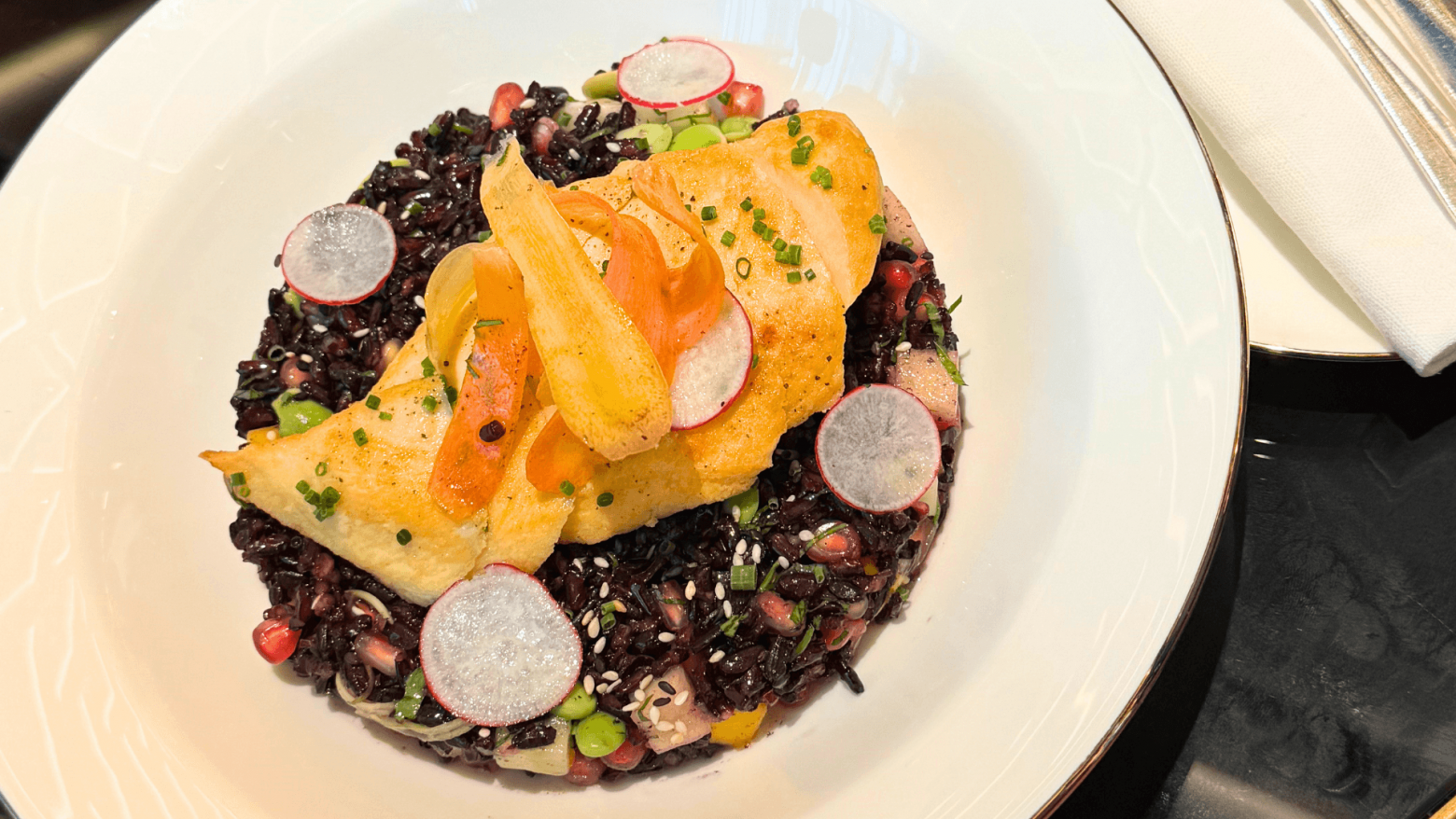
The composition of the whole meal matters most. Protein helps keep your energy steadier when combined with carbohydrates (Wolever et al., 2024). Fiber, carbohydrate type, fat, and total quantity all matter too. Looking at one ingredient alone tells you little about how that lunch carries you through the afternoon.
Give protein a real place in the meal, then build carbohydrates, vegetables, fiber, and fats around it, matched to your own needs.
Balanced means knowing the proportions that your body needs that particular day, not a generic plate composition that someone who is not living a demanding lifestyle like yours told you to follow. The breakdown of the composition matters more than the amount. When I tell my clients there is no portion control but there is composition, they cannot believe it because they’ve spent years associating eating well with restriction, myself included.
For an executive, a meal isn’t just a health decision; it’s a performance decision. What you eat when you can shapes how clearly you think and how well you perform at 4pm.
I hear this from almost all of my clients. Before we start working, they thought they were eating healthily. In the program, they learn to build balanced plates, not just plates that look healthy. Each person has a different lifestyle, schedule, and health goals, so their balanced plate looks different too. If you want personalized support, click here.
The Hydration Piece Nobody Tracks
Food isn’t the only lever. Many executives reach the afternoon dehydrated; single espressos, black coffees, matcha lattes with coconut milk, calls, and back-to-back meetings quietly replace water throughout the day.
A 2024 study in the American Journal of Human Biology linked dehydration to poorer performance on a sustained attention task (Rosinger et al., 2024). The effect was specific to sustained attention, exactly what a long meeting or presentation demands.
If you’re dehydrated after a short night’s sleep, and you add the natural afternoon dip and an unbalanced meal, the problem stops being one isolated factor. It is actually the combination.
It’s Not Just Energy, It’s Your Mood Too
Executives tend to name the energy crash and miss the mood change sitting right next to it. Shorter patience on a 3pm call, less tolerance for a slow reply, and a sharper tone than usual all show up in the same window.
A 3pm crash is rarely just a food problem. Once you look at the complete pattern, the afternoon makes much more sense.
A well-designed lunch supports the whole afternoon, not just your physical energy.
What Should You Actually Do About It?
Rebuild Your Lunch Around Protein. If lunch is a sandwich, wrap, pasta, or bowl, check what’s actually carrying the meal. If it’s mostly bread, rice, or pasta with a small amount of protein, reconsider the balance.
Watch the “Healthy” Traps. Smoothies, wraps, salads, and bowls can all be excellent choices, but the name tells you little. Check the actual composition. A salad can be nutritionally complete, or mostly vegetables, dressing, and little protein. A smoothie sounds fancy but is mostly fruit and juice.
Learn the Real Proportions of Your Plate. Two plates with the same “healthy” ingredients can have very different effects. 300g of chicken breast, 100g of rice, and a zucchini behaves differently than 50g of chicken, 100g of rice, and the same zucchini. Same ingredients, different ratio, different energy. Before a big negotiation, board meeting, or presentation, pay attention to the actual proportions on your plate, not just what’s on it.
Keep Water Visible, Not Just Available. Water on your desk gets used. Water somewhere else doesn’t. Build it into the same rhythm as your meetings and coffee rather than waiting until you notice you’re thirsty.
Pay Attention to the 3pm Coffee. A caffeinated drink is the automatic response to an afternoon dip. It makes you feel alert temporarily, but it doesn’t address why the dip happened. Depending on dose, timing, and your sensitivity, afternoon caffeine can still disrupt your sleep that night, even hours later.
That creates an easy cycle to miss: poor sleep, stronger afternoon sleepiness, another coffee, another compromised night.
How Should Executives Think About This?
Most executives blame the 3pm crash on discipline, a demanding day, or simply needing another coffee.
I’d look at it differently. Your 3pm performance is the result of what happened before 3pm.
The previous night’s sleep sets how much pressure you carry into the day. Your eating pattern shapes how you arrive at 3pm. Hydration builds across the morning. Meal composition and quantity shape the post-meal period. Caffeine temporarily shifts how alert you feel. Underneath it all, your body’s internal clock drives its own natural change in alertness.
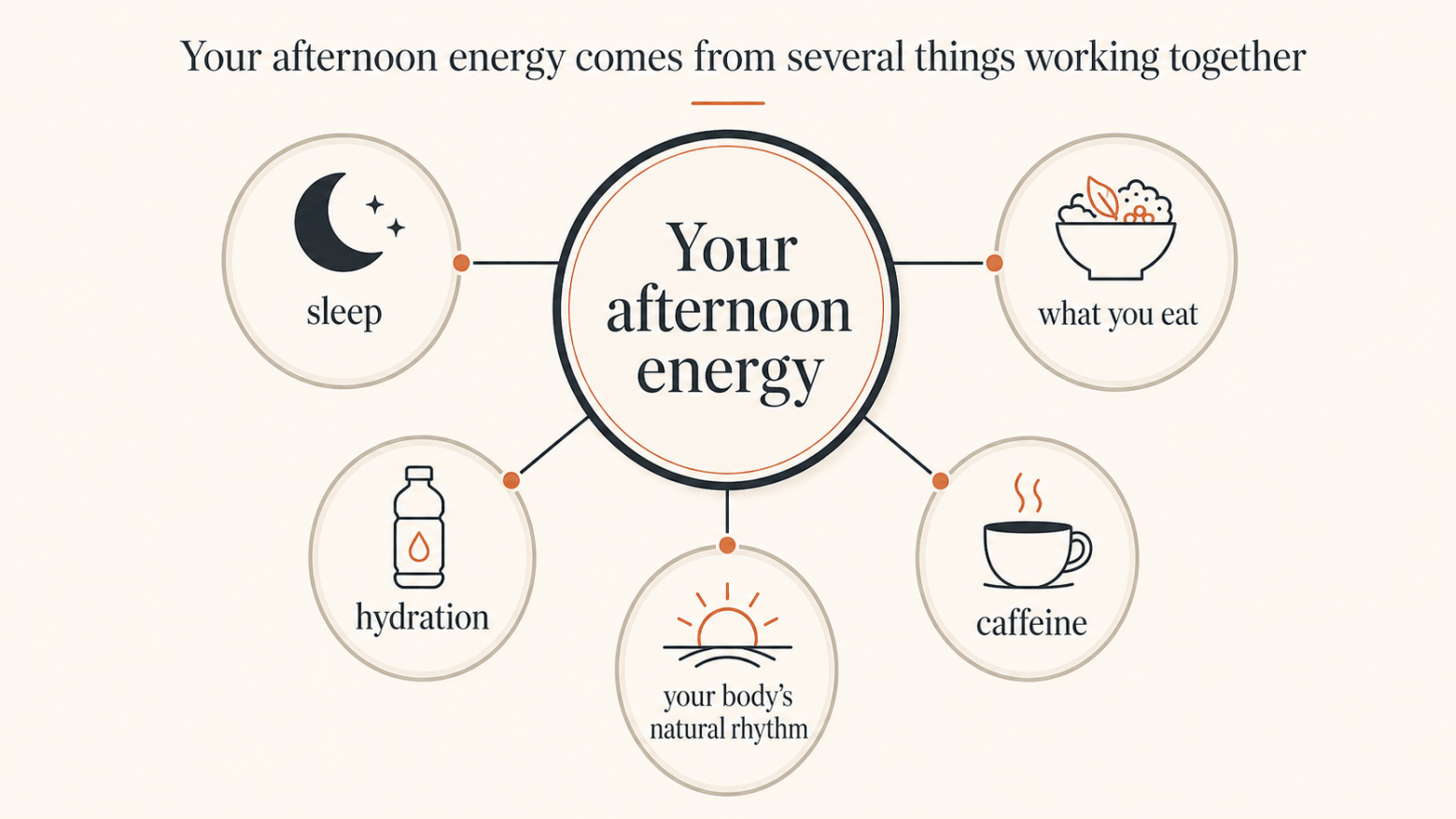
Your afternoon energy comes from several things working together: sleep, what you eat, hydration, caffeine, and your body’s natural rhythm.
One of these alone may not make much difference. When several happen together, you can really feel it in your energy, patience, and focus.
Understanding what actually makes you tired helps you manage it much better.
Key Takeaway
The afternoon crash isn’t a mystery, and it isn’t about willpower. It’s rarely one single thing either.
A meal can look healthy and still be poorly designed for the afternoon ahead. Sleep, hydration, meal composition, portion ratios, and caffeine all shape how strongly you feel the natural afternoon dip.
For executives, the goal goes beyond avoiding sleepiness. It’s protecting your thinking, attention, and decision-making through the hours the day still has left.
Related Reading
How Executives Can Eat for Stable Energy and Mood



0 Comments