Most executives will protect a client dinner, a board deadline, an early flight, or a PT session. Sleep is usually the first thing to give. It usually feels replaceable, until the cost shows up somewhere else. The list is long: a slower read on a negotiation, a shorter fuse in a difficult meeting, constant food cravings, or poor performance at the gym.
The thing is, sleep isn’t downtime. It’s part of how you perform.
Why Does Sleep Affect Energy, Mood and Focus?
Sleep is when your body and mind recover from the day. If you sleep less than you need, the damage doesn’t stop at just feeling tired. It spreads into other areas. Focus narrows, patience shortens, and the small decisions that make up most of an executive’s day get harder to make well. You don’t just feel sleepy, you perform worse across the board.
You’ve likely felt this yourself: a short night, and the next day’s meetings take more effort than they should. Many executives think this is about willpower, supplements, exercise, maybe being overweight. However, sometimes the underlying issue is simply insufficient or poor-quality sleep.
What Happens When Executives Don’t Get Enough Sleep?
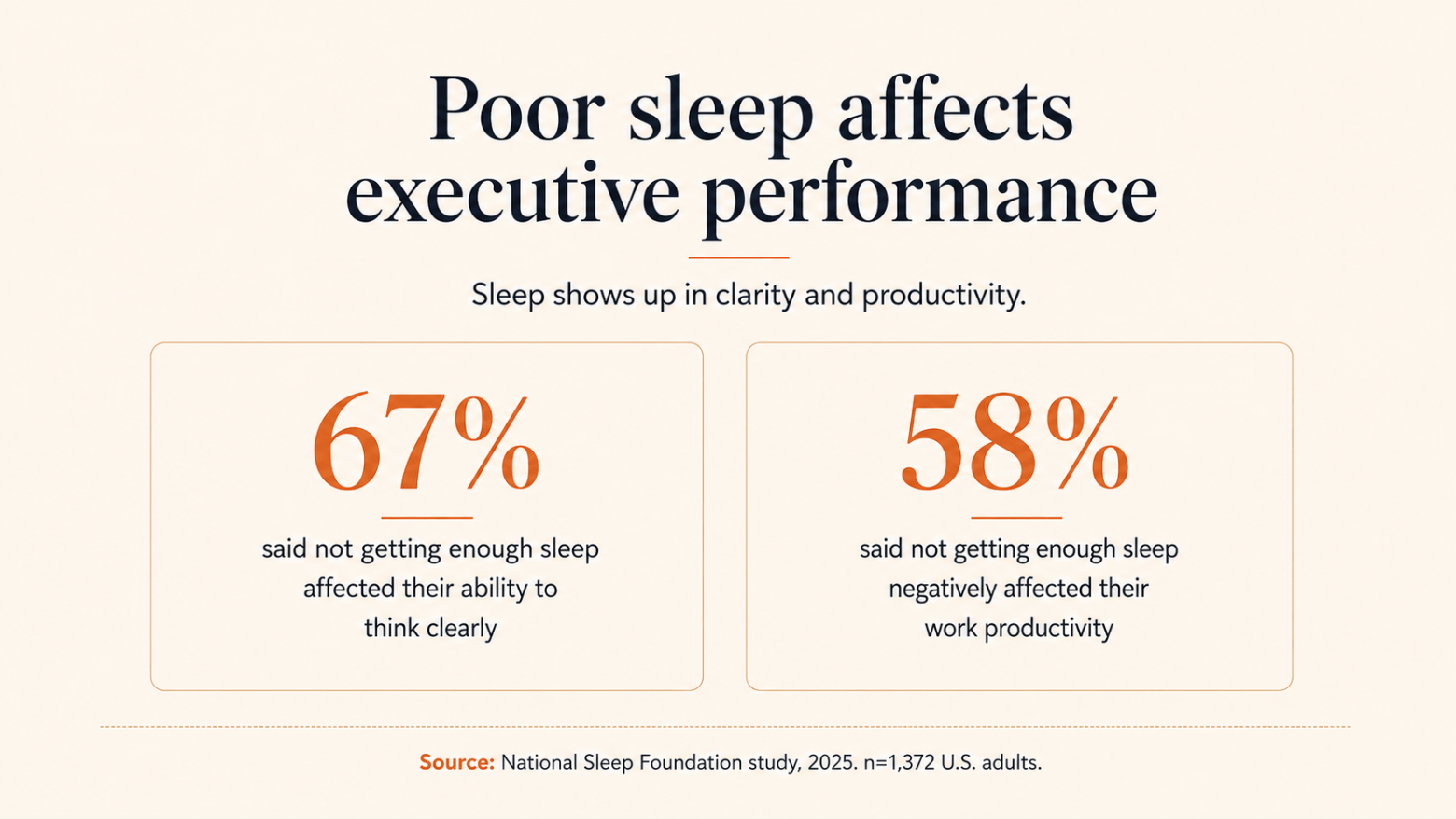
The cost is beyond just personal, companies feel it too. A 2025 National Sleep Foundation study of 1,372 U.S. adults found that 58% reported that not getting enough sleep negatively affected their general work productivity, while 67% said poor sleep affected their ability to think clearly (National Sleep Foundation study, 2025).
For senior executives, in general, this doesn’t show up as absence. Most of the time it is a slow erosion. Decisions slow down, patience gets shorter in high-stakes conversations, appetite gets bigger, and energy runs out earlier in the day than it should.
What Can You Do to Protect Your Sleep on a Demanding Schedule?
First, you shouldn’t underestimate the power of sleep. Try to understand whether your habits are costing you sleep, in quantity or in quality. The National Sleep Foundation recommends 7-9 hours for most adults, although demanding schedules can make that difficult to achieve.
Start With Your Nutrition
Nutrition is the most underestimated item. In my experience, proper nutrition can make a noticeable difference to sleep. At least this is what most of my clients and I experience every day.
Back in finance, there were many days I was not getting the calories from the right sources and was only able to sleep 2-3 hours. Today, my C-suite clients can sleep wherever and whenever they need to, and nutrition is one part of the system I create for them.
Prioritize Your Sleep, Not Your Workout
The most common misconception is that you need to hit the gym every day, even on a business trip. Most of the executives I start working with do exactly this.
However, it’s not about the number of your workout sessions, most of the time it’s about the quality. An exhausted body cannot perform well at the gym, but a well-rested body can.
Therefore, don’t sacrifice your sleep. I know you want to move, but if you listen to your body, it’s telling you it needs to rest.
Watch Your Caffeine and Alcohol Timing
Both affect sleep more than you’d think, especially later in the day. A caffeinated drink such as coffee, green tea, or matcha latte at 4pm or a nightcap can affect your sleep quality. Next day, you might think you need a supplement to fix it, when caffeine or alcohol may be contributing.
You Don’t Need Your Pillow, You Need A System
I’ve heard of executives who take their pillows with them on business trips. It might be a good idea, but if you ask me, I’d say it’s too much effort. Stop focusing on the symptoms. You are responsible for your actions, i.e. exercise, nutrition, drinks. Focusing on root causes makes a big difference. As a senior executive, your system needs closer attention. You cannot expect perfect sleep unless you understand what your body really tells you. If you need to understand what your body needs for better sleep, click here.
Focus on your nutrition, exercise, and caffeine or alcohol intake, and you’ll see the improvement. You want to be perfect, but you need to optimize your system first. Practice makes progress (then perfect).
What About Travel and Time Zones?
Sleep is usually the first thing travel takes from you. It’s not easy to follow a stable schedule in new time zones and hotel rooms, with back-to-back meetings on arrival.
The rule is simple: you can’t control every variable. However, focusing on your nutrition, exercise timing, and caffeine or alcohol intake as much as possible while far away from home might help you sleep longer and deeper.
Is 8 Hours Really Necessary?
Not as a strict rule. What matters more is consistency and how you feel the next day, alert, steady, able to focus, versus running on reserve. Some executives function well on slightly less, provided that they compensate on the following days. Others need more. The number matters less than paying attention to your own pattern.
Stop sacrificing sleep for performance. Sleep makes performance possible.
Key Takeaway
Stop sacrificing sleep for performance. Sleep makes performance possible. You don’t need a perfect routine. Balanced nutrition, the right exercise timing, and watching your caffeine and alcohol timing go a long way, even on a packed calendar.


0 Comments