
Most executives I speak with know that their health matters.
They know the importance of exercise, nutrition, quality sleep, hydration and managing stress.
The question is why they do not start right away, rather than tomorrow, the tomorrow that often never comes.
Tomorrow becomes next week. Next week becomes after the business trip, the board meeting or the holiday.
Their health goals remain important, but something else keeps becoming more urgent.
What Is Procrastination?
Procrastination is the voluntary delay of an intended action, even when we know the delay may work against us. This definition traces back to Piers Steel’s 2007 meta-analysis in Psychological Bulletin, the foundational study in this field. (Steel, 2007)
A 2024 review published in Nature Reviews Psychology builds on this, describing procrastination as a prevalent form of self-regulatory failure. The researchers reviewed why people delay intended actions, what contributes to procrastination and what can help reduce it. Their work shows that procrastination is broader than poor time management. It involves how people regulate goals, decisions and action over time. (Mahy, Munakata & Miyake, 2024)
This is where health goals can get postponed. You may genuinely want to improve your physique, energy, sleep, nutrition or overall performance. The intention is there, but the action keeps moving to tomorrow.
From a coaching perspective, this gap is important. The 2025 ICF Core Competencies focus on helping clients turn awareness into action, define goals, identify barriers and build accountability around the actions they choose. (International Coaching Federation, 2025)
So the question becomes: what is happening between “I want this” and “I am doing this”?
Why Is Health So Easy to Postpone?
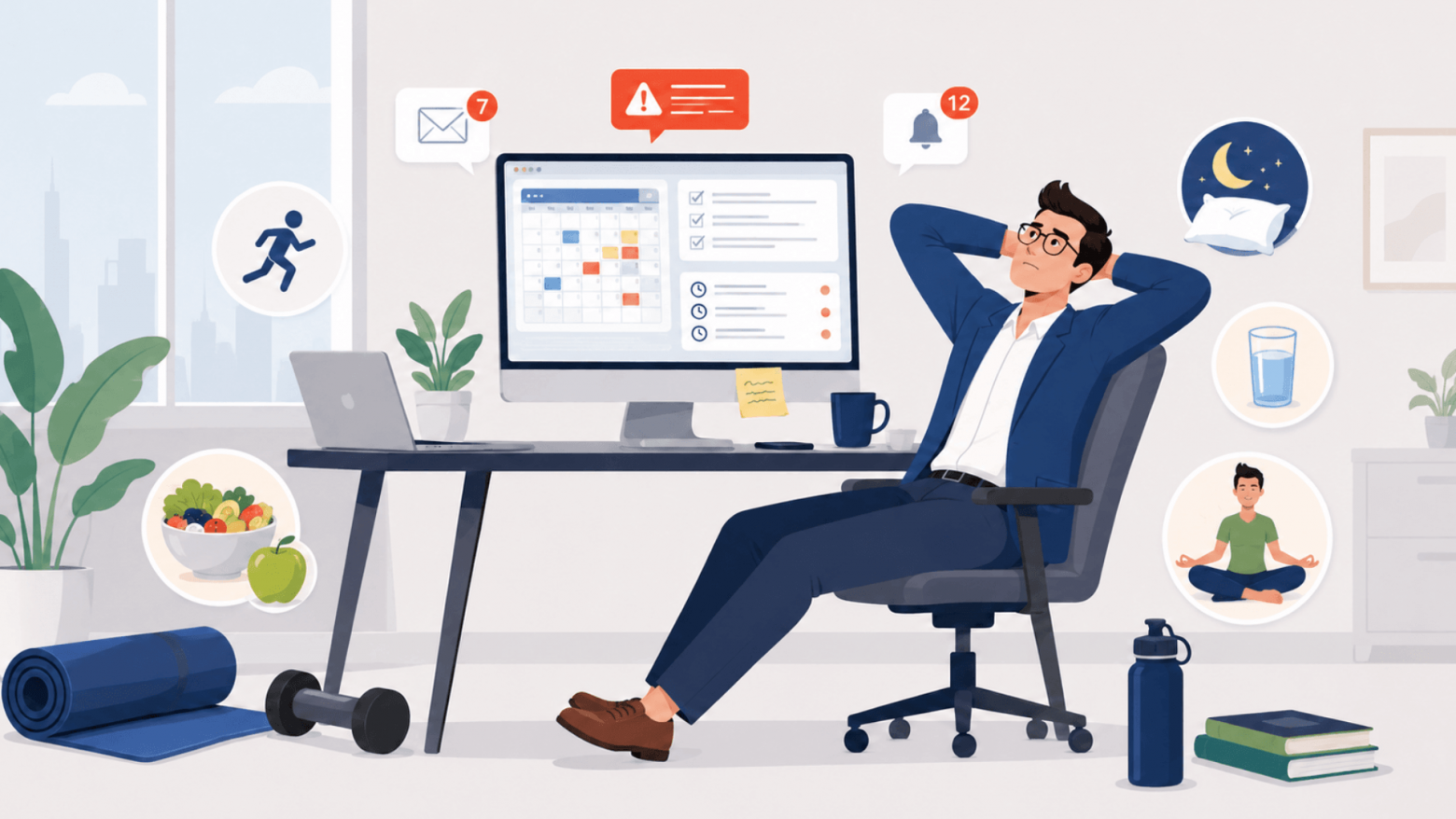
Executives work where priorities constantly compete for attention.
A client needs an answer. A board meeting is approaching. A flight needs to be caught. Last-minute travel comes up. These things have a clear deadline and an immediate consequence.
Personal health goals may feel more flexible.
You can move a workout. Your physique can wait until next month. Lower energy can feel manageable for another few weeks. Sleep can become something you promise to improve when work becomes quieter.
And life continues.
Until one thing happens.
Time to Take Action
You see an old friend after a few months. A CEO with a demanding schedule, but he looks fit and happy. You think, I need to do something.
Another friend is a mother and senior executive, always busy. She is glowing. She looks slimmer. You want to know what she is doing.
You button your shirt and see how tight it has become. The transition period has lasted longer than expected.
You have different sizes of clothes in your wardrobe. Some of the smallest ones still have price tags. Then you see a colleague in the elevator who looks different. You think, maybe I can do something too.
Or your son wants to play football with you, and you realize you cannot run with him the way you want to.
How Can Coaching Help Turn Intention Into Action?
The client defines what they want to achieve, what matters and what they are ready to commit to. Then we look at what is happening between intention and action.
What keeps getting in the way?
Are you waiting for something specific?
What would make starting realistic within your current life?
Which decision can you make now?
The goal belongs to the client. So does the action.
A coach helps bring clarity, structure and accountability around that decision. For an executive, the solution has to fit demanding schedules, travel, dinners, family responsibilities and changing workloads.
From “Tomorrow” to a Decision
A health goal becomes easier to act on when the decisions are clear and specific.
“I will start after my trip” turns into choosing a date.
“I am going to deal with this when work gets quieter” becomes deciding what can realistically happen within the current schedule.
“Knowing you need to do something” becomes identifying what that “something” actually is.
The real shift is from an open-ended intention to a clear decision.
Key Takeaway
Executives already know how to make decisions and follow through on priorities.
The same skill can be applied to health.
If you have been saying “I’ll start tomorrow,” a useful question may be:
What am I ready to start today?
Related Reading
Why Generic Wellness Advice Fails Senior Executives
Self-Empathy and Self-Discipline for Sustainable Habits

0 Comments